
This article was donated by historian Henry Wainwright. Henry is scheduled to give a talk in “Shipwrecks Around Bigbury Bay” in the Reading Room on February 1st 2024
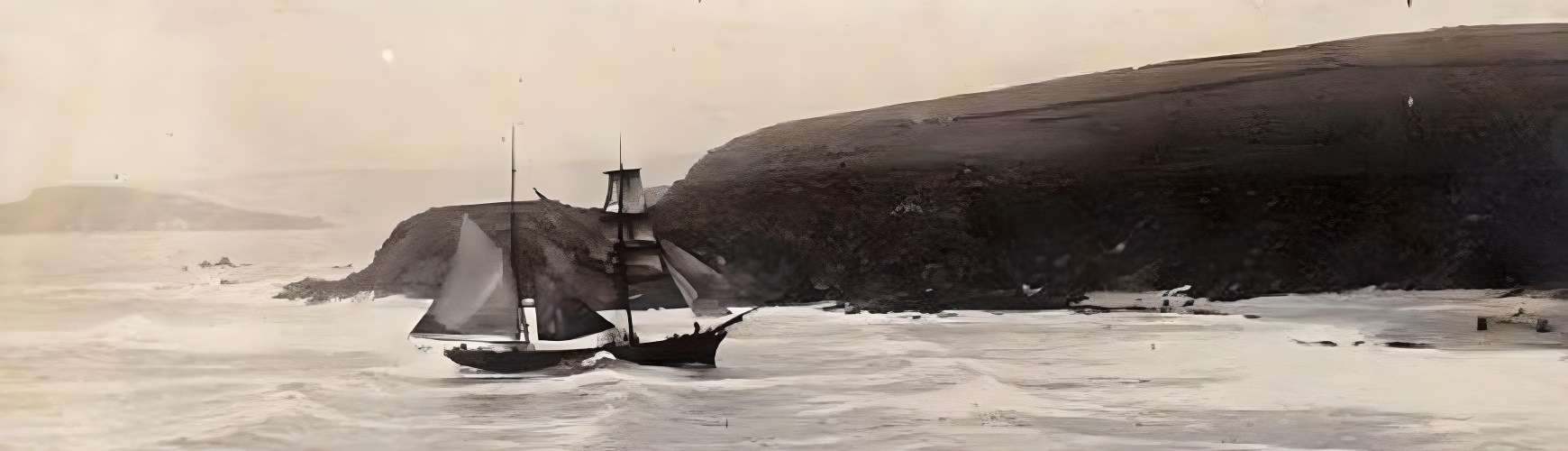
When the residents of Thurlestone awoke on the morning of Friday 7 May 1908 they were surprised to see a brigantine, the Crossowen, in full sail aground on Yarmer Sands. They were even more surprised that when they managed to get aboard the ship that appeared to be fully functional, yet the lifeboat was missing and the boat was deserted. Was this a local re-run of the earlier mystery of the Mary Celeste?
In 1872 the Mary Celeste, an American brigantine was found adrift and deserted in the Atlantic Ocean off the Azores Islands. Her lifeboat was also missing along with the crew. The mystery of the Mary Celeste has never been solved though there are countless theories.
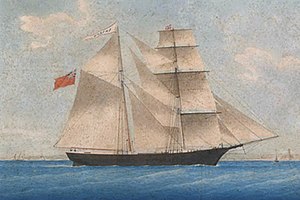
The story of the Mary Celeste would have probably been confined to the history books if it was not for Arthur Conan Doyle and his short story “J. Habakuk Jephson’s Statement” published in 1884. The short story is about a survivor of the Marie Celeste, a fictionalised version of the Mary Celeste, who writes a testimony in the first person. No one did survive the Mary Celeste. In addition, Conan Dolye changed the name. As a result the name Marie Celeste has moved into popular culture and probably better known than the Mary Celeste.
For the Crossowen there was also an unsolved mystery. On the previous night there had been a thick fog despite a strong south-westerly gale. Villagers had heard gunfire, which could have been distress signals but no guns or canon were found on board the Crossowen. Eventually when the coast guards managed to board the Crossowen there were signs that the crew had left in a hurry. Over the next few days the bodies of the crew were recovered from Bantham beach and the Captain’s body found at Cockleridge in the river Avon. In his pocket were all the ship’s papers. The Crossowen was badly holed and was a total wreck within two weeks of first hitting the beach. At the coroner’s enquiry, held in the Village Inn at Bantham (now the Sloop Inn), the coroner found it inexplicable that the Captain had not used his foghorn that was still in his cabin. The coroner returned a verdict of accidental drowning.
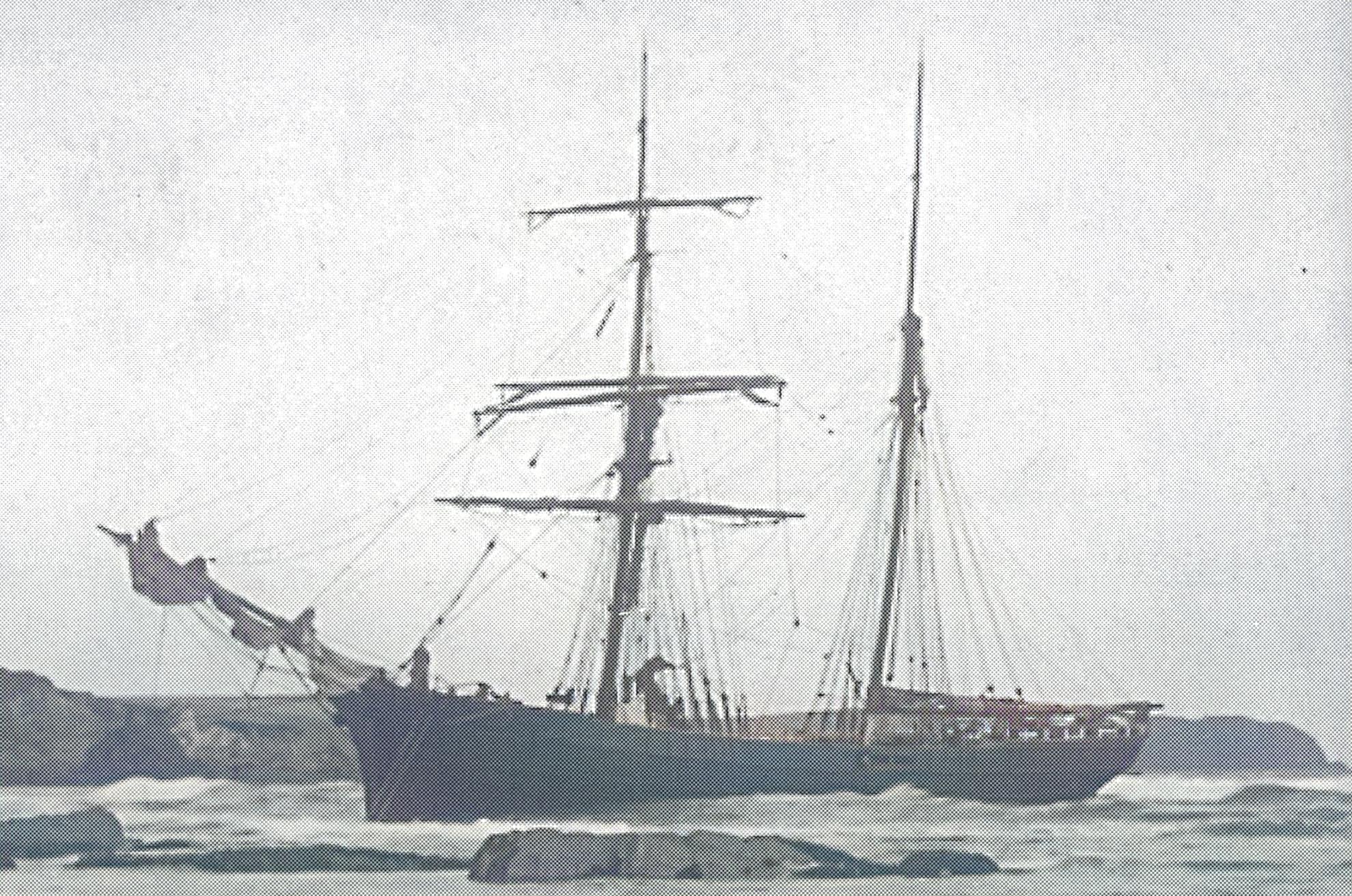
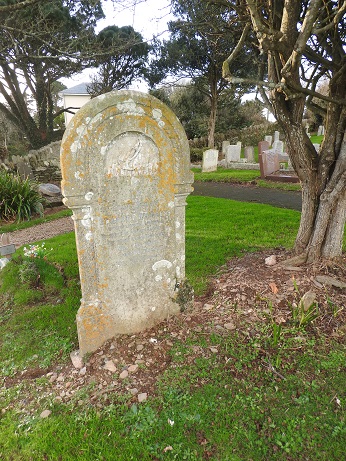
As for the cause of the tragedy, the popular theory was that the Crossowen hit rocks on the edge of Burgh Island. Thinking the ship was doomed, the captain and crew took to the lifeboat and rowed to towards the sound of breakers to find a beach on which to land. Unfortunately, the dangerous breakers at the mouth of the Avon estuary were their demise when the lifeboat overturned. With the rising tide, a crew-less Crossowen became free of the rocks and sailed onto Thurlestone beach. Today the only sign of this tragedy are the gravestones of the Captain and his crew in Thurlestone churchyard.
Henry Wainwright

 Kingston Local History Society