
My Family and World War Two — Carole Walters
England was on the brink of war again. My parents were engaged and decided they would marry when the Minister came back from Europe, waving the piece of paper saying ‘Peace in our time’.
They married and World War Two started. My father went to enlist in the RAF. Mother, not wanting to be called up, joined the ATS becoming a staff car driver which took her to all parts of the country, barely coming home.
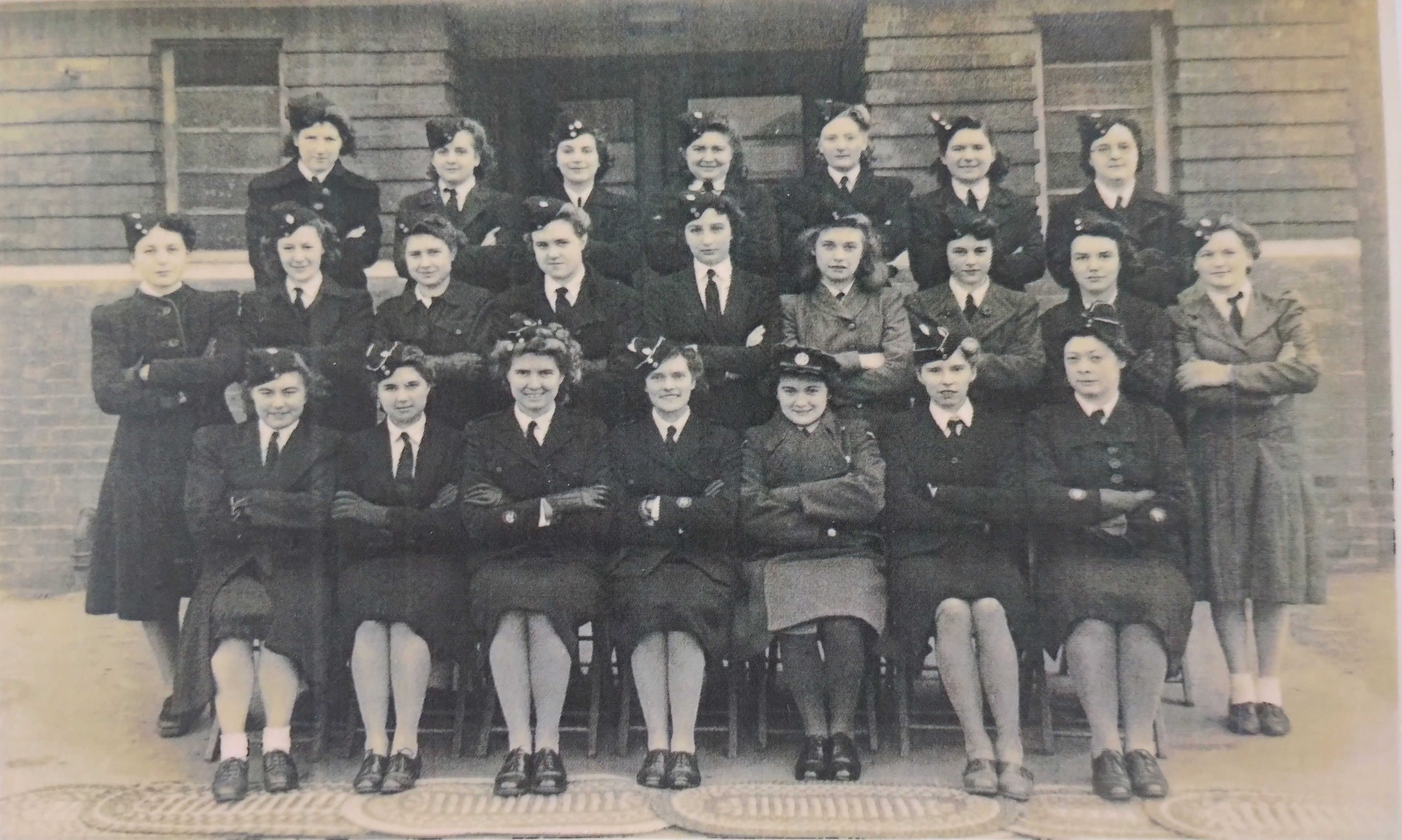
Father on the other hand was a trained toolmaker and worked at Vickers Aircraft Factory so his attempt at joining the R.A.F. was denied and he stayed put in Weybridge, Surrey. He worked with Barnes Wallace on the bouncing bomb and a curve ball action, these two had to work and roll in a special way to give the bounce. This took a while to get right and the Dambusters film proved it.
Vickers was bombed badly, my mother was on leave at this time and was sunbathing in the garden when the planes started flying over. She thought they were our planes and gave them a wave. Then she heard the sound of bombs and realised these were not our planes. She got on her bike and peddled like fury towards Vickers. We lived in a very wooded area called The Hills, St Georges Hills. Not being able to get near to Vickers, she went down to the village Council Offices waiting for the names of the dead and injured to be printed. My father did not come home for days as he was a St John Ambulance trained medic. He luckily had not been hurt and could help the injured. It was the girls in the rib gallery got it worst as the roof above was glass. The shards fell like daggers, most died – not all deaths end on the battle fields.
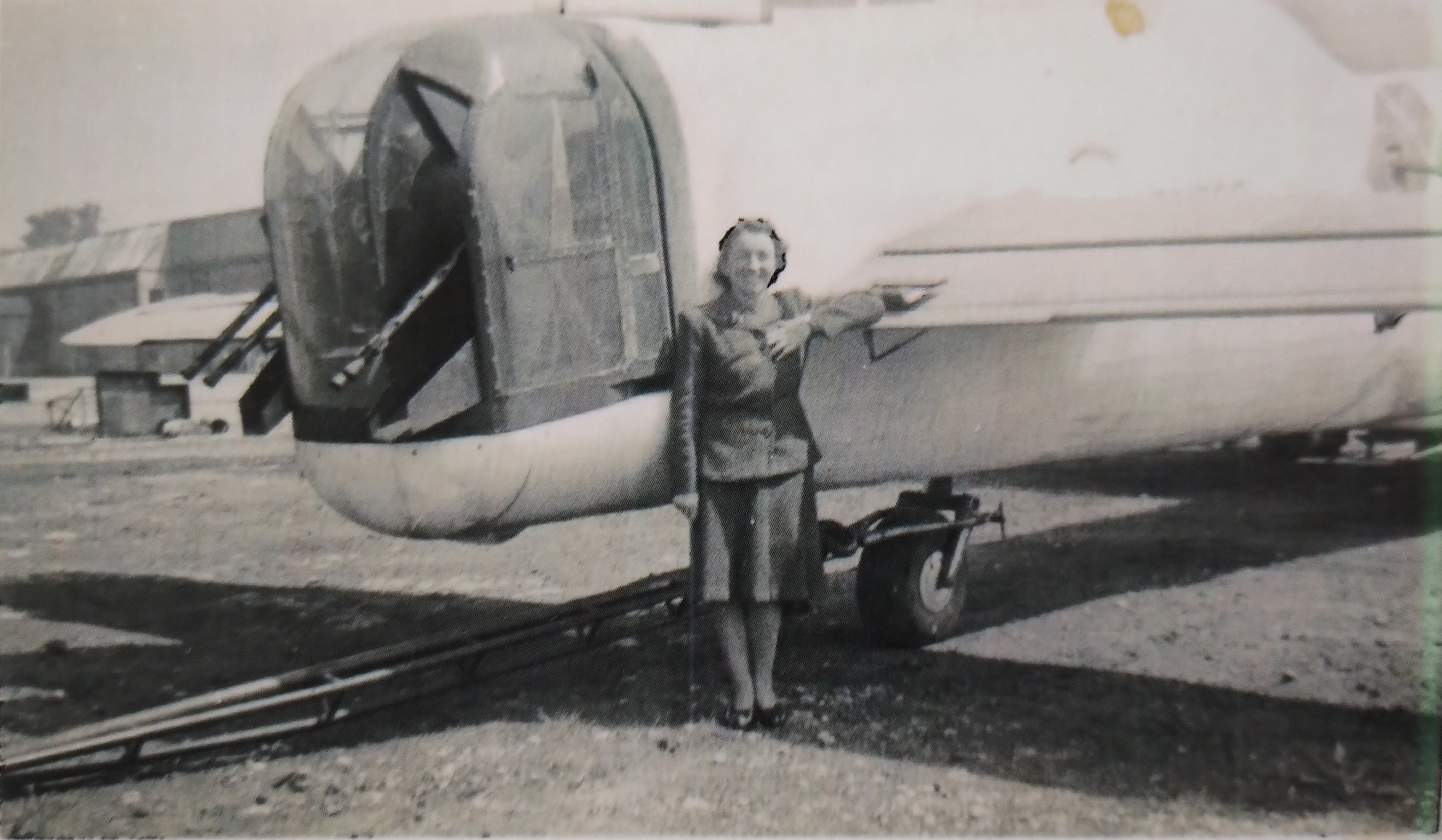
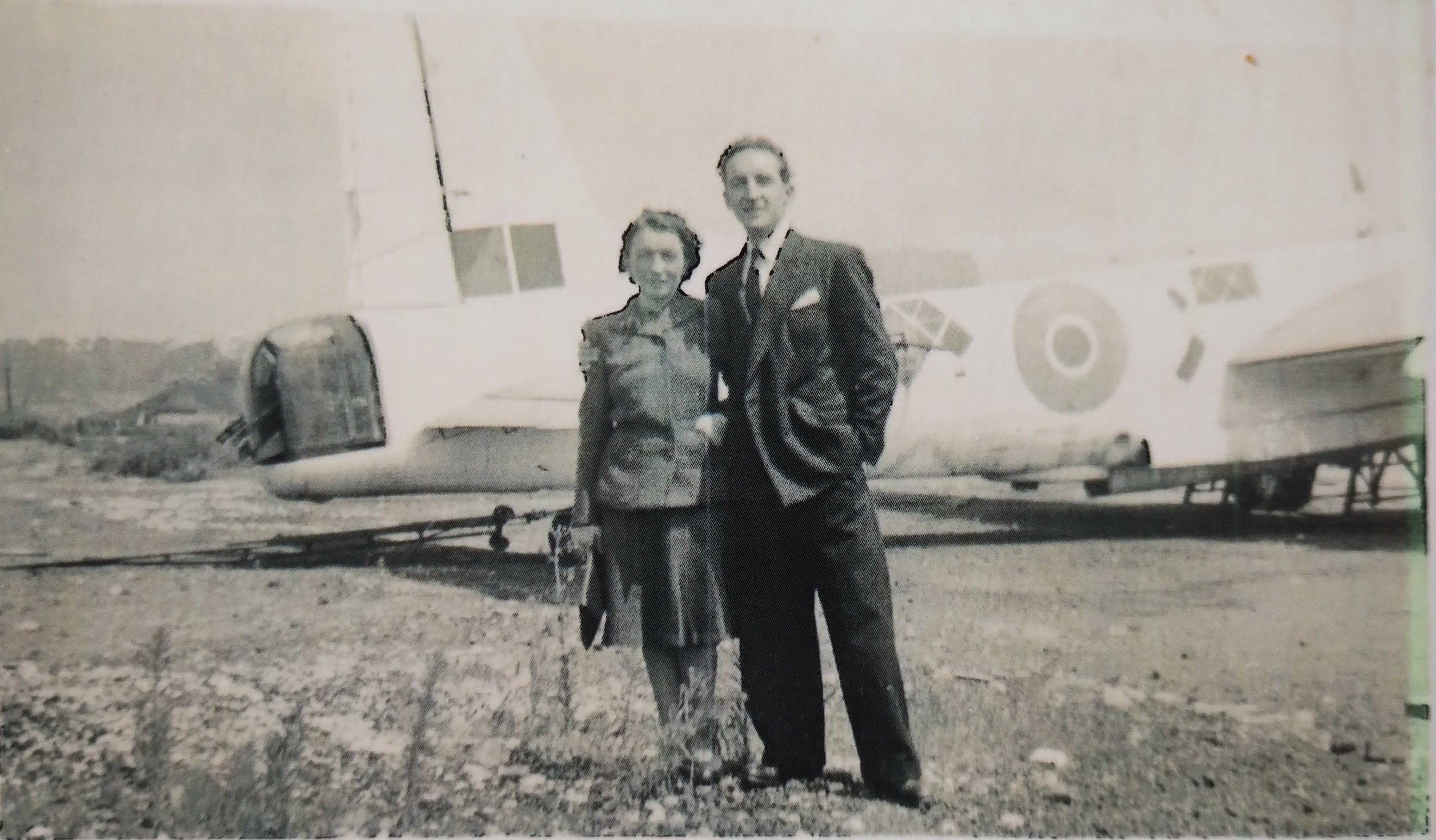
Vickers Aviation Weybridge – Carole Walters’ father and Aunt Peggy
My aunt Margaret (Peggy) Eagle came down from Edinburgh to live with my father. Her husband and brother-in-law were away fighting in Egypt. Aunt Peggy spoke French fluently and so was recruited to work with the French underground. A florist shop in London was just a front for the real work that was going on in the cellars beneath, giving the resistance in France the information of where things would be dropped by aircraft and helping to get help in and out. My mother received an unsigned letter informing her that my father had taken another woman to live with him!!
The end of the war came and I remember as a child going on shopping trips to London’s Oxford and Regent Streets. Outside on the pavement were many men, some with no legs, sitting on wooden boards with wheels and shunting themselves along with begging bowls and with signs saying ‘old soldier’. They were also to be seen on the stations and underground. I have only recently realised these men disappeared at some stage. Was this the fact that they were now receiving the help they deserved? Or was it that they were now an embarrassment to the now civilian population? I started as a child collecting for the British Legion.
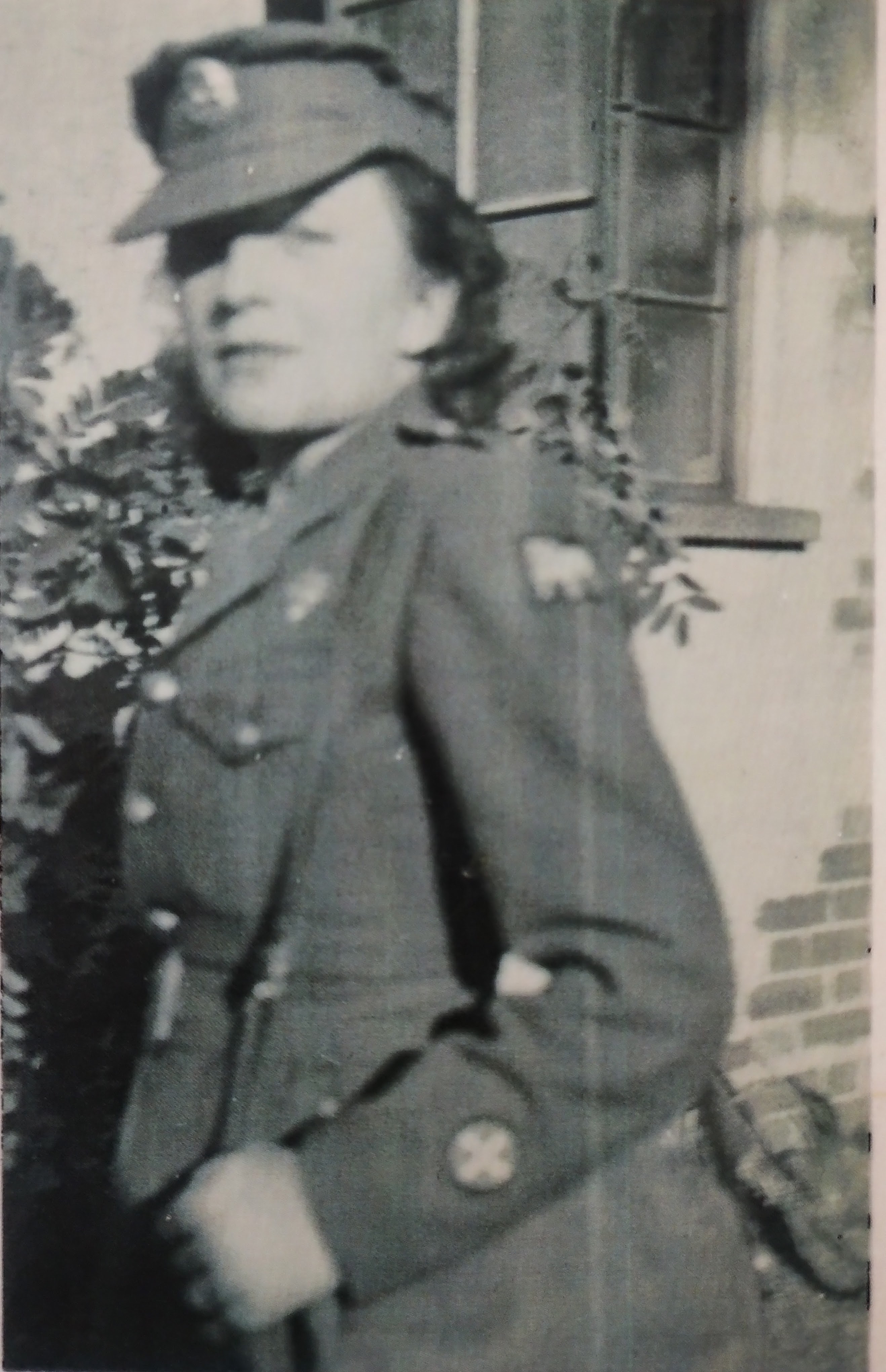
Eric’s sister in uniform
My great uncle, Ted, was in the First World War with my grandfather. They were both messengers on horseback, galloping along the lines with messages. My great uncle gave me many stories of his brother, his wild ways and daring feats. So was it the British Legion or the Government or the Army, Navy and AirForce looking after those poor men? Where did they go?
Carole Walters April 2025
 Kingston Local History Society