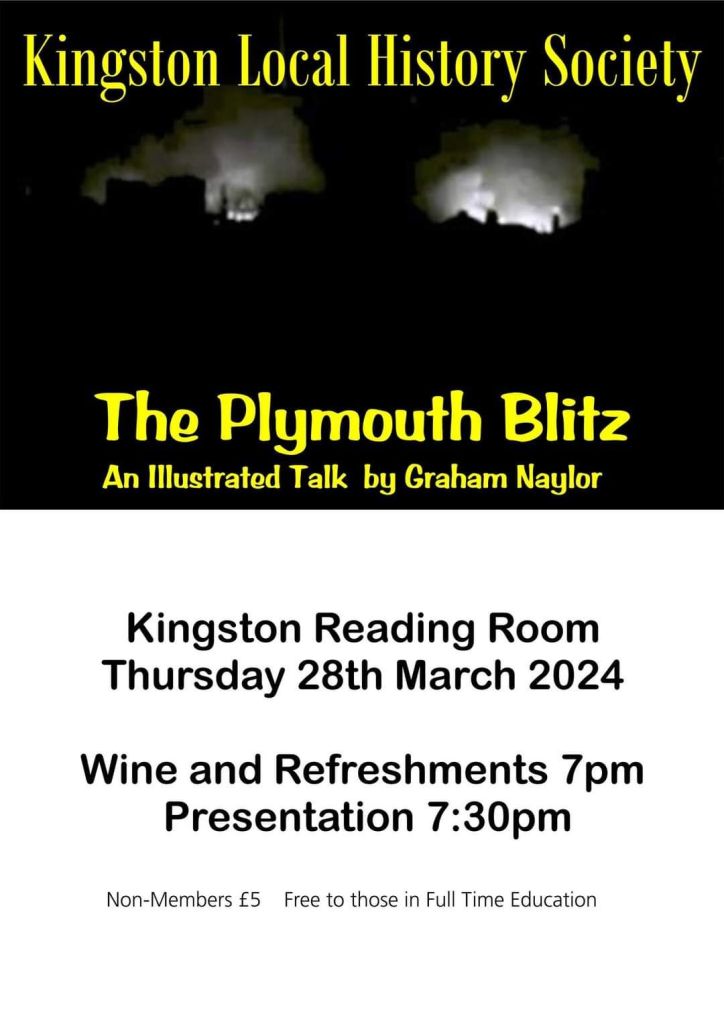
Event cancelled!

Kingston Local History Society
Discovering and sharing the history of Kingston, a village in the South Hams of Devon, England
“Modbury Through Time – a History of the Devonshire Town and its People” is a newly published book by Helen Charlesworth comprising a fascinating selection of newspaper articles from the 1700s onwards.
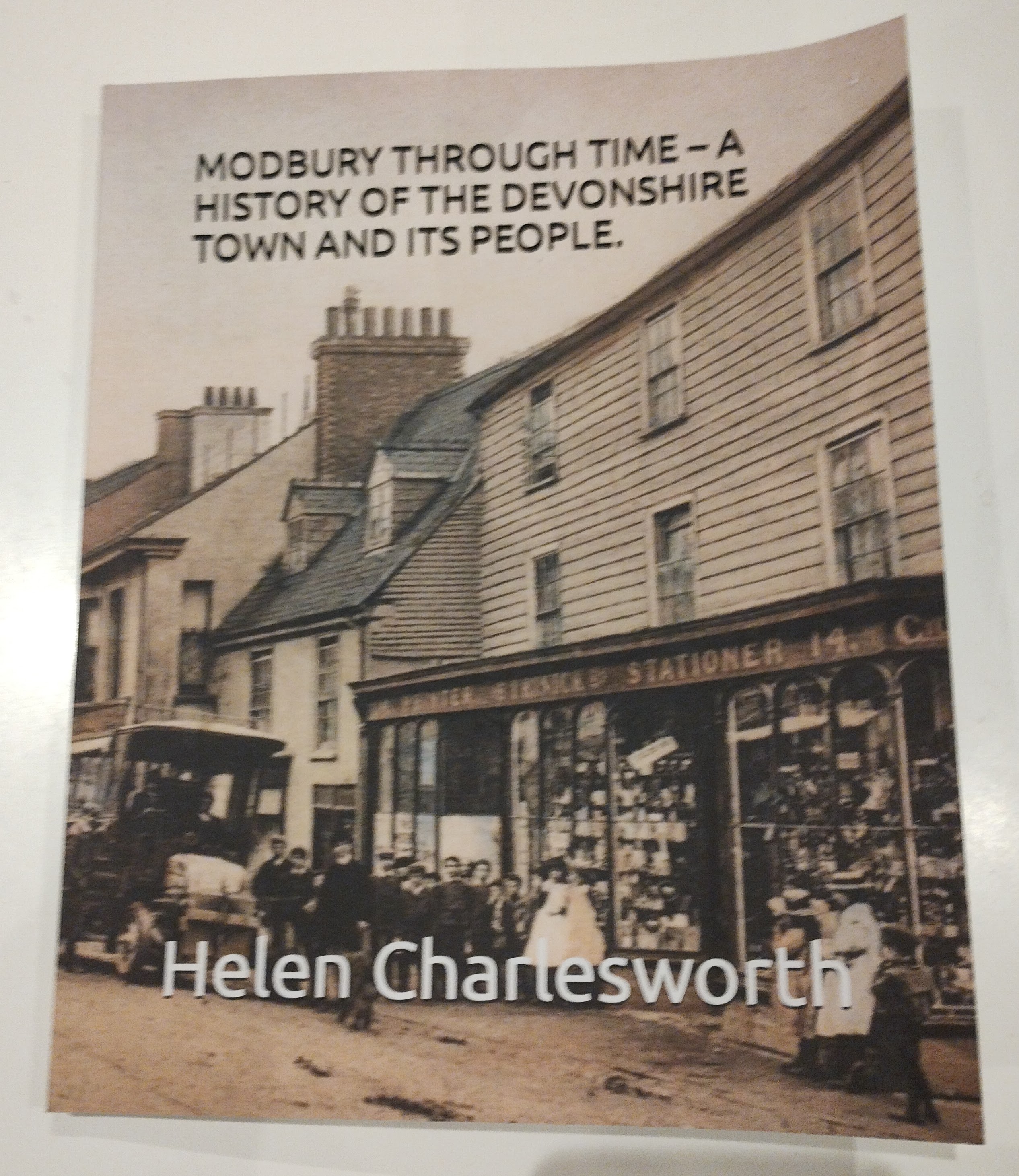
Its pages feature grisly deaths, accidents, disputes and plenty of colourful characters. Kingston appears in several articles, alongside tales from Ringmore, Yealmpton, Aveton Gifford and other nearby villages.
In one Kingston story from 1876 the church choir “fled in horror; having witnessed the ghostly apparition of a dead church minister.”
In another a labourer was fatally crushed by a falling wall – his bones having been “shockingly fractured in almost every part of his body”.
Road traffic accidents are nothing new: In 1889, near Orcheton Mill a horse drawn lime cart ran out of control. ”Twenty-eight year old George Southern ran to lend assistance.. but was dragged under the cart and died from the injuries he received. He left behind a wife and three young children all aged under five.”
The book is not currently available in bookshops, but can be bought online here.

2023 continued the Kingston tradition of Christmas carol singing round the village. KLHS members and other residents assembled by the fire station and progressed around the central part of village, singing their way from corner to corner, knocking on doors and demanding money for charity – with the threat of more carols if generosity was not forthcoming! On being roused by a knock on his door, Viv Freeman requested ‘Silent Night’ – which, he pointed out with a customary wink, meant ‘Go Away!’.
Glasses of sherry and mince pies were provided by generous householders en route. The carol troupe ended up in the Dolphin where, after a final chorus of “We wish you a Merry Christmas!” Leon and Natasha kindly supplied mulled wine and yet more delicious mince pies. This photo from Janet and Colin Burton beautifully captured the atmosphere. of the evening.
Approximately 40 KLHS members sat down for a slap up seasonal meal in the Reading Room yesterday evening. There was a great atmosphere, well lubricated with wine and chatter, as we all tucked into a marvellous roast dinner prepared by Craig from the Modbury Inn, ably assisted by members of his family. Thanks to all who helped organise the event and to Bob Musk for this snap.

Kingston Local History Society Christmas Dinner will be taking place in the Reading Room on Thursday 14th December 7 for 7.30 cost £25 per head. There is still time to sign up. More details from the Secretary Tim Matthews kingstonlhs@gmail.com.
Debbie Shotter has joined the Committee as from the AGM in October. Information on all the current Committee members can be found here.
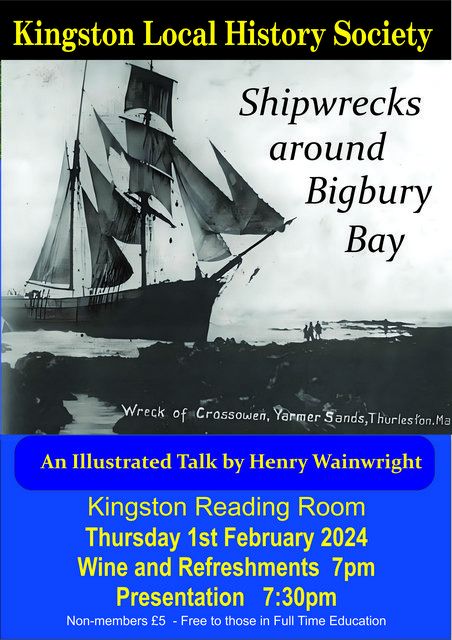
Everyone is encouraged to refer to this KLHS website for updates on upcoming society events. Another feature of the KLHS website is unique material on the village and its history including photos and videos forming part of the KLHS archives. Recently added is an article by Bigbury/Easton resident Henry Wainwright “The Mystery of The CROSSOWEN – The MARIE CELESTE of Bigbury Bay” exploring the wreck of The CROSSOWEN at Yarmer Sands, Thurlestone on 7th May 1908. This sets the scene for the first KLHS talk arranged for the New Year when Henry Wainwright will speak on “Shipwrecks Around Bigbury Bay” in the Reading Room on Thursday 1st February 2024.
An important function of KLHS is to collect and catalogue material relating to the history of the village. If anyone would like to get involved with management of the archives please let us know. Equally we are always delighted receive new documents to be added to the archive.

This article was donated by historian Henry Wainwright. Henry is scheduled to give a talk in “Shipwrecks Around Bigbury Bay” in the Reading Room on February 1st 2024
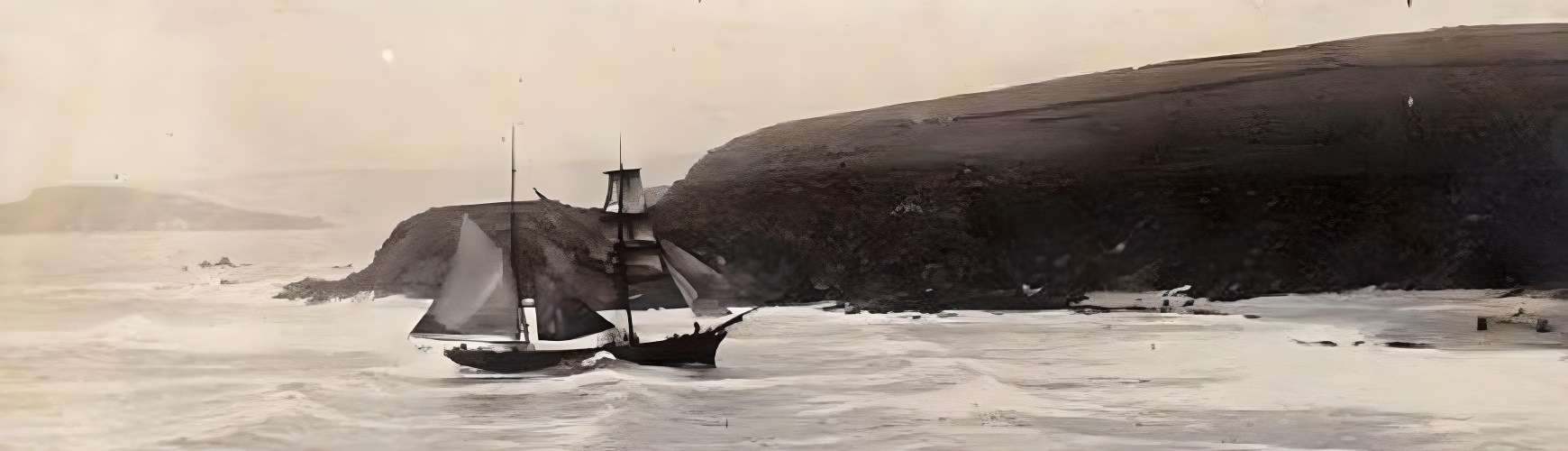
When the residents of Thurlestone awoke on the morning of Friday 7 May 1908 they were surprised to see a brigantine, the Crossowen, in full sail aground on Yarmer Sands. They were even more surprised that when they managed to get aboard the ship that appeared to be fully functional, yet the lifeboat was missing and the boat was deserted. Was this a local re-run of the earlier mystery of the Mary Celeste?
In 1872 the Mary Celeste, an American brigantine was found adrift and deserted in the Atlantic Ocean off the Azores Islands. Her lifeboat was also missing along with the crew. The mystery of the Mary Celeste has never been solved though there are countless theories.
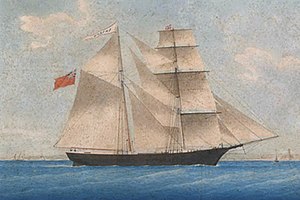
The story of the Mary Celeste would have probably been confined to the history books if it was not for Arthur Conan Doyle and his short story “J. Habakuk Jephson’s Statement” published in 1884. The short story is about a survivor of the Marie Celeste, a fictionalised version of the Mary Celeste, who writes a testimony in the first person. No one did survive the Mary Celeste. In addition, Conan Dolye changed the name. As a result the name Marie Celeste has moved into popular culture and probably better known than the Mary Celeste.
For the Crossowen there was also an unsolved mystery. On the previous night there had been a thick fog despite a strong south-westerly gale. Villagers had heard gunfire, which could have been distress signals but no guns or canon were found on board the Crossowen. Eventually when the coast guards managed to board the Crossowen there were signs that the crew had left in a hurry. Over the next few days the bodies of the crew were recovered from Bantham beach and the Captain’s body found at Cockleridge in the river Avon. In his pocket were all the ship’s papers. The Crossowen was badly holed and was a total wreck within two weeks of first hitting the beach. At the coroner’s enquiry, held in the Village Inn at Bantham (now the Sloop Inn), the coroner found it inexplicable that the Captain had not used his foghorn that was still in his cabin. The coroner returned a verdict of accidental drowning.
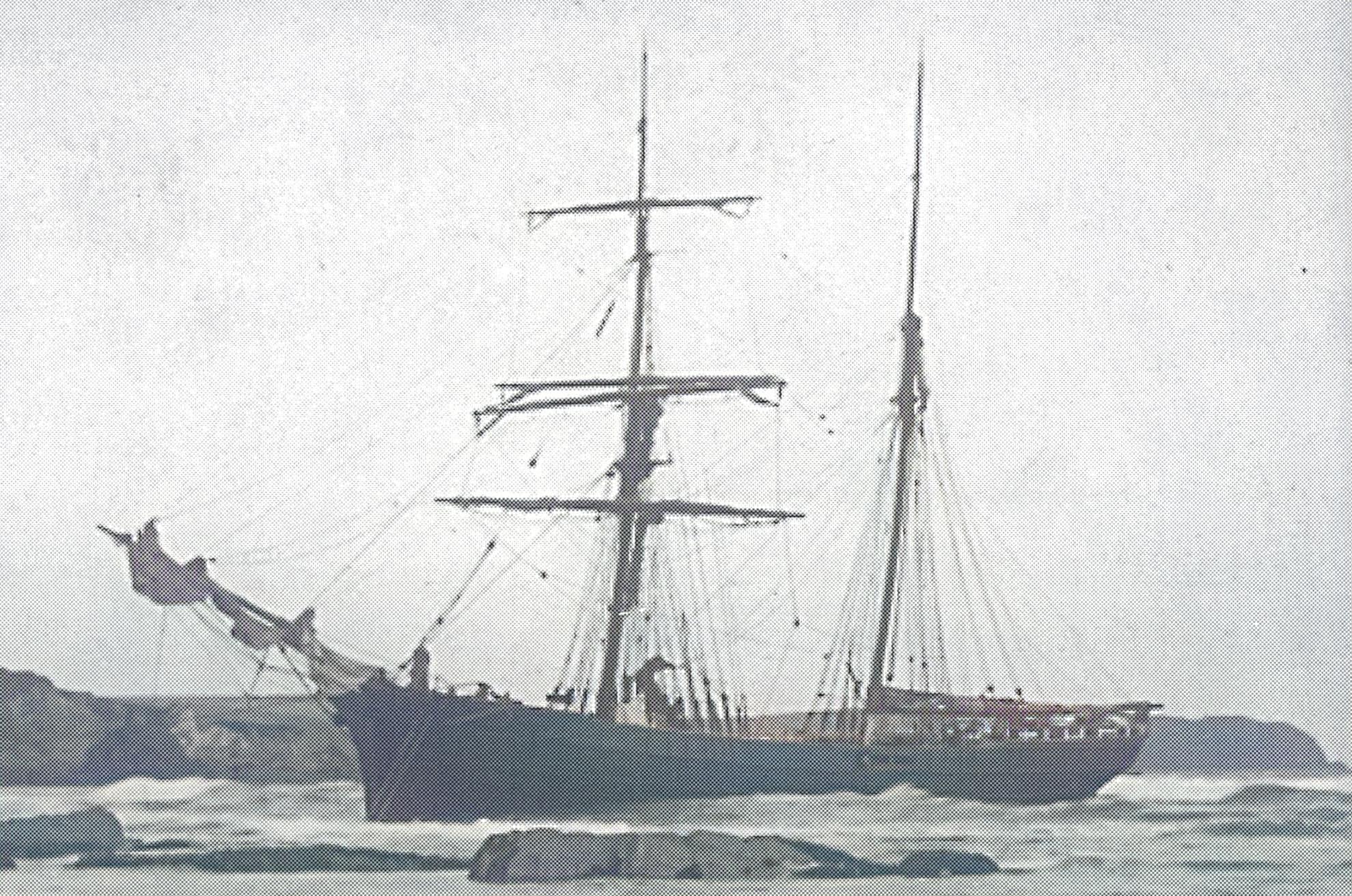
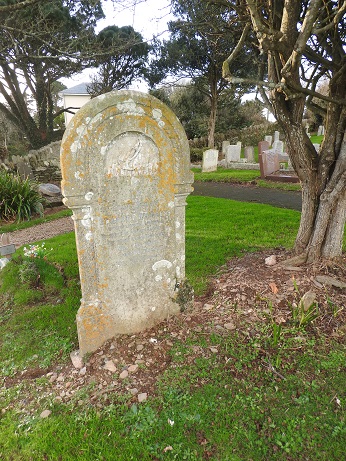
As for the cause of the tragedy, the popular theory was that the Crossowen hit rocks on the edge of Burgh Island. Thinking the ship was doomed, the captain and crew took to the lifeboat and rowed to towards the sound of breakers to find a beach on which to land. Unfortunately, the dangerous breakers at the mouth of the Avon estuary were their demise when the lifeboat overturned. With the rising tide, a crew-less Crossowen became free of the rocks and sailed onto Thurlestone beach. Today the only sign of this tragedy are the gravestones of the Captain and his crew in Thurlestone churchyard.
Henry Wainwright
You can now see the latest Calendar of Events for the rest of 2023 and the first half of 2024. The list includes expert guest speakers on a wide variety of topics, and at least one organised trip.
Also included is the date for the Christmas Dinner. An email will be sent to members with the details and menu etc.
Thanks as usual go to Margaret Kelly and Vanessa Walker for their work in organising these events.

 Kingston Local History Society